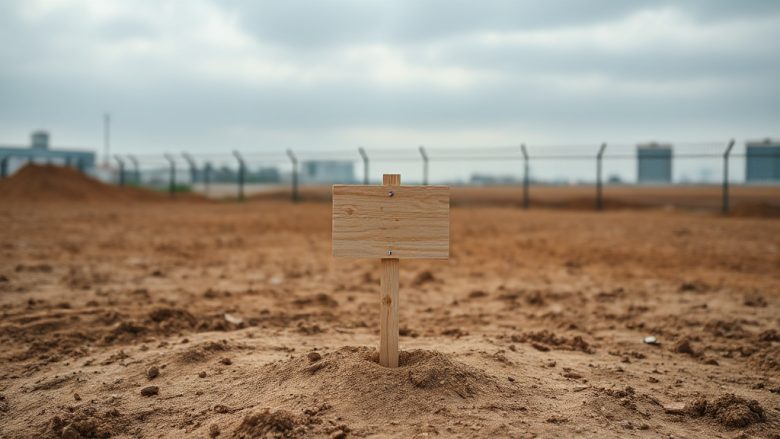
A Sign on an Empty Plot: What Sits Beneath an Unverified Domain
Picture a plot of land with a sign staked in it and nothing yet poured. The sign gives you a name, maybe a promise, maybe a phone number. What it cannot tell you is whether the ground underneath will hold a foundation, whether the drainage runs the right way, or whether anyone has checked the soil at all. That is the honest position of a domain like FHM95: a marker on an otherwise empty lot. A passerby sees the sign, but the sign alone tells them very little about what has actually been built, verified, or even started.
Search intent around a name like this is usually simple: someone wants to know what it is, whether it is real, and whether it is safe to step onto. Those are ground questions, not surface questions. The rest of this column is about the soil, not the sign.
What a domain sign can and cannot tell you
A domain name is a label. It is not a business license, a track record, or a guarantee of anything. When a site has no clear title, no description, no visible heading, and no readable text on the surface, the sign is all you have. That is not a reason to panic, but it is a reason to slow down and look at the layers below.
Think of a piece of online real estate the way a builder thinks about a lot. The sign is the address. The foundation is the infrastructure. The soil is the evidence. Most people stop at the address and assume the rest exists. A domain name is a claim, not a confirmation. Treating it otherwise is how people end up trusting a plot with nothing underneath it.
The surface layer: what you can see
On the surface, an unverified domain usually shows one of three things: a placeholder page, a bare login or landing screen, or nothing at all. None of these proves fraud, and none of them proves legitimacy. They simply mean the site has not presented itself yet. A sign in an empty field is not a lie. It is just not evidence.
The middle layer: what the site says about itself
This is where a domain either starts to explain itself or stays silent. Look for a clear description of what the site does, who runs it, and how to reach them. If those answers are missing, the middle layer is unbuilt. That gap does not tell you the site is bad, but it does tell you the site has not done the groundwork that a real operation normally does.
The base layer: what can be checked independently
Beneath the site’s own words sits the layer you can verify without taking anyone’s word for it: registration records, domain age, hosting history, and whether the name appears in independent sources. This is the soil test. It is boring, it is slow, and it is the only layer that does not depend on the site being honest about itself.
Three layers of missing groundwork
When a domain like FHM95 has no visible content, the missing groundwork usually falls into three recognizable layers. Naming them helps you decide how much weight to give the name and how much to give your own caution.
The first missing layer is identity. There is no stated owner, no about page, no contact route, and no explanation of what the name refers to. Without identity, there is no one to hold accountable and no way to check a claim against a source.
The second missing layer is purpose. A site with no title, no description, and no visible text has not told you what it is for. That matters because purpose determines risk. A portfolio page, a coming-soon landing page, and a front for something else can look identical from the street.
The third missing layer is history. Even a quiet domain leaves traces over time: when it was registered, whether it changed hands, whether it was ever active. History is the closest thing to a soil sample you will get, and it is the layer most people skip because it takes a few minutes of looking.
None of these gaps is proof of wrongdoing. They are simply unbuilt ground. The mistake is filling those gaps with assumption instead of evidence. An unverified domain should be treated as unknown, not as trusted and not as condemned.
Patience is part of the groundwork
Builders do not pour a foundation the day they stake the sign. They wait for surveys, permits, and soil reports. The same patience applies here. A domain that looks empty today may be a project in progress, a parked asset, or a placeholder awaiting content. Rushing to a conclusion is the equivalent of pouring concrete on unexamined ground.
Patience does not mean passivity. It means doing the cheap checks first: confirm the registration details, look for independent mentions, and see whether the site changes over a few weeks. If the sign is the only thing on the lot, note that and move on. You lose nothing by waiting, and you avoid building trust on ground that has not been tested.
When you do decide to engage, do it the way you would walk onto any unfamiliar site: share nothing sensitive, treat unsolicited contact as unverified, and let the evidence accumulate before you commit. The name on the sign, whether it reads FHM95 or anything else, is only the beginning of the question. The answer lives in the layers beneath it, and those layers are worth checking before you build anything on top.